
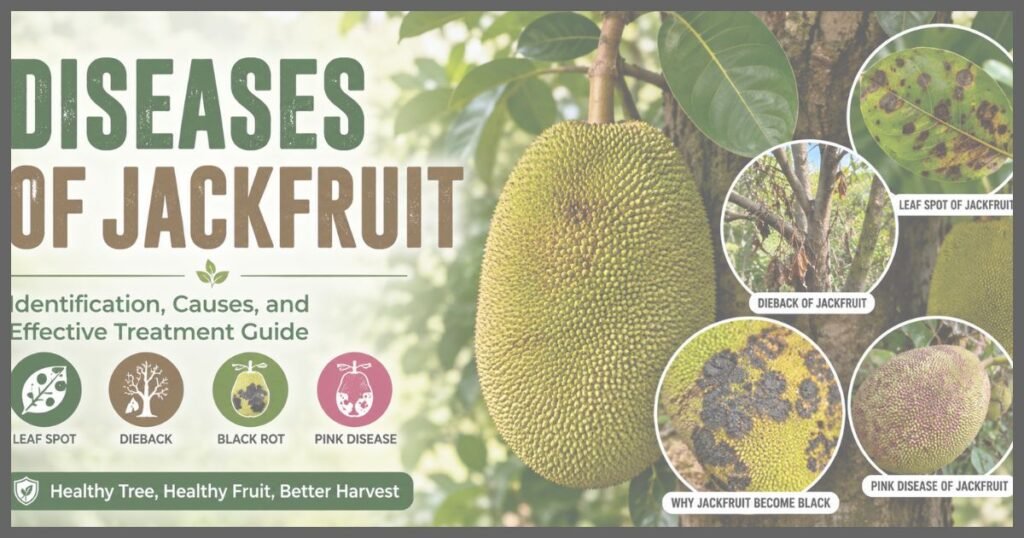
Jackfruit (Artocarpus heterophyllus) is a tropical fruit tree prized for its large, nutritious fruits. Yet diseases of jackfruit can significantly reduce yields and fruit quality. Common problems include fruit rots, leaf spots, and trunk infections caused by fungi, bacteria, or environmental stresses. This comprehensive guide explores the major diseases of jackfruit, their symptoms and causes, and how to prevent and control them.
Jackfruit trees are hardy, but when orchard hygiene and growing conditions falter, pathogens can take hold. Early detection and proper management are crucial. By understanding each disease’s signs and lifecycles, growers can adopt cultural, biological, and chemical strategies to protect their orchards.
Major Fungal Diseases of Jackfruit
Several fungal diseases regularly affect jackfruit. Rhizopus rot, Phytophthora rot, pink disease, and anthracnose/leaf spot are among the most important. For example, a University of Florida Extension notes that jackfruit in Florida face Rhizopus fruit rot (by Rhizopus spp.), gray mold (Botrytis), and root rots by fungi like Phytophthora and Pythium. Leaf spots by Colletotrichum and Phyllosticta artocarpi also occur. In high-humidity climates, these fungi can cause rapid spread, fruit decay, or even tree death. Cultural factors like poor drainage and high humidity favor many fungal diseases, so cultural control (pruning, sanitation, etc.) is key. Integrated disease management combines multiple approaches (see later sections).
Rhizopus Fruit Rot
Figure: Jackfruit afflicted by Rhizopus rot, showing black fuzzy fungal growth and soft decay. Rhizopus rot is one of the most devastating fruit diseases in jackfruit. It typically strikes blossoms and young fruit, especially during rainy or humid periods. Initial symptoms are soft, watery brown spots on the fruit surface. Soon a fuzzy white mycelium with black spore clusters covers the fruit, which quickly shrivels and rots. In severe outbreaks, up to 30% of fruits can drop prematurely.
No resistant varieties are known, so managing Rhizopus rot relies on prevention. Recommended steps include pruning to increase airflow, removing and destroying infected fruit and blossoms, and avoiding injuries to fruit. Ensuring good drainage and clean orchard floors (removing debris) also reduces humidity around trees. Fungicide sprays (e.g. copper fungicides or Mancozeb) can protect fruit during wet weather. After harvest, wash and dry fruits thoroughly to prevent postharvest rot. With these practices, farmers can greatly lower losses from this common jackfruit disease.
Phytophthora Root and Fruit Rot
Phytophthora species (oomycetes, often called water molds) cause serious root rot, collar rot, and fruit rot in jackfruit. Phytophthora infections are favored by waterlogged soils or heavy rain. Early symptoms on roots include browning and decay near the base; aboveground, leaves yellow, wilt, and drop. Dark cankers or gum exudation (gummosis) often appear on trunk or roots. Fruit rot by Phytophthora palmivora looks like brown soft patches on fruit surfaces. A recent outbreak in Vietnam found P. palmivora causing severe jackfruit decline: symptoms included root rot, trunk cankers, gummosis, leaf blight, defoliation, and brown fruit rot, leading to tree death in 10–60% of orchards. Management starts with improving drainage: do not let water pool around trees.
Raised beds or mounds can keep roots drier. Remove infected trees or roots and avoid replanting susceptible crops (like citrus or durian) nearby. Soil drenches or trunk injections of phosphonate or systemic fungicides (e.g. metalaxyl, phosphonates) can protect against Phytophthora. Dr. Scot Nelson’s extension guide notes avoiding soil compaction and keeping seedlings healthy as critical control steps. In nurseries, inspect root health and use only pathogen-free soil. These measures are effective because controlling Phytophthora greatly reduces jackfruit loss in wet zones.
Pink Disease (Erythricium/Pellicularia salmonicolor)
Pink disease (also called pink rot or cortical decay) is a fungal infection that attacks branches and trunks of jackfruit. The causal fungus (Erythricium salmonicolor, formerly Corticium or Pellicularia salmonicolor) produces a telltale pink to salmon-colored powder on bark. Infected twigs develop a pink fuzzy coating, often around branch crotches. As the fungus penetrates the bark, the wood decays and cracks, and bark may peel off. Leaves on affected branches wilt and die back. This disease often follows heavy rains or humid weather.
Management for pink disease focuses on sanitation and pruning. Cut out and destroy infected branches, taking care to remove all pink fungal growth. Unlike some crops, copper fungicides can be used on jackfruit; spraying or painting Bordeaux mixture (copper sulfate-lime) or copper oxychloride on wounds and pruned areas helps kill residual fungus. For example, a TNAU crop protection guide advises pasting Bordeaux on cuts to prevent pink rot progression. Maintaining open canopies (prune crowded limbs) and avoiding injuring bark can help prevent pink disease. Overall, keeping trees healthy and removing sources of infection are the best defenses against pink disease of jackfruit.
Leaf Spot and Anthracnose
Leaf spots and fruit anthracnose are caused by various fungi like Colletotrichum, Phomopsis (Phomopsis artocarpina), Phyllosticta artocarpi, and Glomerella species. On leaves, small brown or black spots appear, often with yellow halos. Infected leaves may turn yellow and drop prematurely in heavy infections. On fruit, anthracnose appears as sunken black spots on the rind, sometimes merging into large rotten areas. These fungi thrive in warm, moist conditions.
Management of leaf spot centers on sanitation: regularly remove fallen leaves and pruning debris where spores can overwinter. Prune the tree to allow sunlight in and reduce humidity. Foliar fungicide sprays (e.g. Mancozeb, copper oxychloride, or carbendazim) applied at key times (pre-monsoon and rainy periods) can suppress outbreaks. In an IPM study, Bordeaux paste was also effective on jackfruit leaf spots when applied before rain. Encouraging biological controls like beneficial Trichoderma spp. can inhibit many jackfruit leaf pathogens. Moreover, ensure balanced fertilization – nitrogen excess can make foliage more susceptible. With these steps, leaf-spotting diseases can be kept in check.
Figure: Leaf spot (anthracnose) on a jackfruit leaf, with brown-black lesions. A common sign of fungal infection is discolored leaf spots that merge to cause defoliation. Maintaining clean orchards and timely fungicide sprays helps prevent these jackfruit leaf spot diseases.
Dieback and Gummosis
Jackfruit can suffer dieback (branch or tip death) and gummosis from pathogens like Phomopsis artocarpina (formerly Phomopsis artocarpi). Dieback is often associated with jackfruit dieback disease, where branches become brown and dry from the tip backward. Gummosis is the exudation of sticky gum from bark wounds or cankers, indicating internal infection. In Bangladesh, gummosis by Phomopsis reached 45–87% incidence in some groves.
To manage these trunk diseases, excise affected limbs well below the disease boundary and burn or bury them. After pruning, dip cuts in Bordeaux paste or fungicidal tar to seal wounds. Good tree vigor helps resist dieback: provide regular irrigation in drought, apply organic mulches, and avoid heavy pruning unless done in dry weather. Crop rotation (avoiding replanting jackfruit or related species in same site) can reduce soilborne pathogens. In summary, healthy cultural practices and careful pruning are key to preventing jackfruit dieback and gummosis.
Bacterial Diseases (Blight and Gummosis)
While fungi dominate, bacteria can infect jackfruit too. Bacterial blight or dieback (often from Xanthomonas or Pseudomonas species) causes water-soaked lesions on leaves and twigs. Infected bark may ooze gummy sap (gummosis), and tender shoots blacken and die. There is also the emerging jackfruit bronzing disease caused by Pantoea stewartii – this turns the interior flesh reddish and produces rusty spots in the fruit, although the rind may look normal.
Control of bacterial diseases relies heavily on prevention. Always use healthy, disease-free planting stock and remove infected wood promptly. Copper-based bactericides (like copper oxychloride or copper hydroxide) can suppress bacterial blight when sprayed on foliage and wounds. Avoid overhead irrigation to reduce leaf wetness. In affected orchards, clean tools between cuts and prune during dry weather. Managing associated pests (like bark borers that create entry wounds) also helps. For the newer fruit bronzing disease, high humidity fosters symptom development, so good ventilation and pruning to reduce humidity in the canopy are recommended. Overall, an integrated approach—clean plant material, sanitation, and timely copper sprays—protects against jackfruit bacterial maladies.
Post-Harvest Diseases of Jackfruit
Jackfruit fruits continue to be vulnerable after harvest. Rhizopus rot and Botrytis gray mold can develop on harvested fruit, especially if bruised or stored in poor conditions. The Rhizopus pathogen can even attack flowers left in fruit during transport. To prevent losses after harvest, handle fruit gently to avoid cracks. Wash harvested fruits in clean water and allow them to dry before packing. Do not pack or ship fruit that show any disease symptoms. Keep storage areas cool (but not wet or stagnant) to slow fungal growth. Some farmers use periodic post-harvest dips in a safe fungicide or calcium solution, but check local regulations. In summary, careful harvest and storage practices are the last line of defense against diseases of jackfruit post-harvest.
Cultural and Preventive Practices
Preventing jackfruit diseases often starts long before symptoms appear. Proper orchard design and care keep trees robust. Key practices include: planting disease-free seedlings; spacing trees well to improve air flow; pruning lower branches so air circulates; and removing any weeds or debris under trees. Avoid overhead irrigation during rainy seasons, as splash can spread fungal spores. Ensure good drainage – do not let water stand around trunks after heavy rains. Balanced fertilization (especially avoiding excess nitrogen) keeps growth healthy but not overly succulent.
Regular scouting is critical: inspect trees weekly for unusual spots, wilting, or oozing sap. At the first sign of a problem, remove affected parts. As one extension specialist noted, maintaining a “clean orchard” and destroying any diseased plant material greatly reduces inoculum for pathogens. Planting broad-spectrum flowering cover crops or using trunk wraps can sometimes reduce humidity at ground level. In short, combining good hygiene, spacing, and monitoring is foundational for warding off jackfruit diseases.
Biological Controls and Soil Health
Biological control agents can suppress some jackfruit pathogens. Beneficial fungi like Trichoderma harzianum or Bacillus subtilis products, when applied to soil or as sprays, can outcompete disease-causing organisms in the root zone or on foliage. One study suggests introducing Trichoderma around roots or as a seedling drench helps prevent collar rot by Phytophthora. Similarly, introducing earthworms or cover crops can improve soil structure and microbial diversity, making the environment less hospitable to jackfruit pathogens.
In practice, farmers may apply bio-fungicides (e.g. neem-based or Trichoderma formulations) at planting or during rainy seasons. These have no chemical residues and can be part of an eco-friendly IPM plan. While not a complete solution for major diseases like Rhizopus rot, biologicals are valuable for long-term soil health. Promoting natural predators of pests (which indirectly damage trees) also helps reduce disease entry points. Overall, healthy soil and biologicals are a supportive tool in an integrated disease strategy.
Chemical Control (Fungicides and Bactericides)
When cultural and biological tactics are insufficient, judicious use of chemicals can help. For fungal diseases, common effective sprays include copper compounds (copper oxychloride, copper hydroxide, Bordeaux mixture) and systemic fungicides (mancozeb, carbendazim, metalaxyl). For example, university sources recommend 0.2% metalaxyl soil drench to protect roots, and Bordeaux (1%) or carbendazim sprays on foliage to stop leaf spot. Spray schedules should target pre-monsoon and post-monsoon periods, when pathogens initiate infection. Always rotate fungicide classes to avoid resistance.
For bacterial issues, copper sprays (as above) are standard. Some organic options like Bordeaux paste on cuts (not on fruit) are also practiced. Pesticides must be registered for jackfruit use and followed according to label instructions. Remember safety: apply chemicals when bees are less active and when rain is not expected. Chemical control works best as part of an IPDM approach – not as a sole solution. As one review notes, copper mixtures and Bordeaux paste are “common” for managing Rhizopus rot, leaf spot, dieback and gummosis in jackfruit.
Integrated Disease Management (IPDM)
Integrated Pest and Disease Management (IPDM) is the recommended holistic approach for jackfruit. IPDM means combining cultural, biological, mechanical, and chemical methods in a balanced way. For example, one modern guide emphasizes that IPDM “combines cultural, biological, mechanical, and chemical methods to minimize losses while protecting the environment and beneficial organisms”. In practice, this might look like: planting healthy stock, maintaining orchard hygiene, encouraging natural enemies (birds or ladybugs), using biocontrols in nursery beds, and applying fungicides only when needed.
Research shows that farmers who adopt IPDM can achieve healthier trees and higher yields. As one source concludes, “timely identification and scientific management can significantly reduce losses” and IPDM practices “help farmers achieve higher yields, better fruit quality, and long-term orchard sustainability”. The key is regular monitoring: scout for issues, and apply control measures based on thresholds (e.g., only spray if more than a certain number of fruits show rot). By integrating all available tools, jackfruit growers can sustainably manage diseases year after year.
Nutrient and Water Management
Strong jackfruit trees can often fight off diseases better. Proper nutrition and watering are part of disease prevention. Conduct soil tests and apply a balanced fertilizer regime; ensure adequate potassium and calcium, which often help strengthen cell walls against infections. Avoid excessive nitrogen late in the season, as it can create tender growth more prone to pests and diseases.
Irrigate deeply but infrequently, keeping soil moist without waterlogging. Mulching helps retain moisture in dry seasons but also prevents soil from splashing onto leaves (which spreads soil-borne pathogens). If water quality is an issue, consider drip irrigation. Finally, minimize tree stress: drought-stressed or nutrient-deficient trees are more susceptible to dieback, soft rots, and insects that act as vectors. In summary, a well-nourished jackfruit tree is the first line of defense against many diseases.
Resistant Varieties and Breeding
Currently, there are no widely planted jackfruit cultivars known to be fully resistant to major diseases. However, some farmers report slight variations in susceptibility among local varieties. Breeding programs (e.g. at agricultural universities) are exploring selections with improved disease tolerance. For now, growers can choose vigorous, locally adapted varieties to maximize health.
In some regions, bud grafting onto disease-free rootstocks (like Mulberry or Breadnut) is practiced; this can reduce transmission of root pathogens. Researchers also study wild Artocarpus species as potential disease-resistant sources. If breeding achievements arise, we will update growers through extension channels. Until then, focus on the proven management practices above. Any hints of tolerance (e.g. fruits that ripen without rot in cool microclimates) should be noted and shared with breeders.
Monitoring and Early Detection
Frequent inspection is crucial to catch jackfruit diseases early. Check new flowers, developing fruits, leaves, and bark for symptoms at least once a week during the rainy season. Learning to recognize tiny spots, pollen tube infections, or inconspicuous cankers can allow early intervention. For example, seeing a single fruit with soft brown spots early may allow targeted removal before the fungus spreads to others.
Use a simple scouting form or checklist in your farm log: note the number of rotting fruits, wilted branches, or spotted leaves per tree. Photographic records can help identify trends year to year. Employing simple tools like sticky traps for pests, or fruit fly traps, also helps diagnose indirect stresses that can lead to disease. In short, an attentive grower who prunes out one infected branch today can save many fruits tomorrow.
Internal and External Resources
For further reading and management tips, growers can consult extension publications from tropical agriculture institutes. Universities such as the University of Florida, Hawai‘i (CTAHR), and regional agricultural services regularly publish guides on jackfruit care. There are also chapters on jackfruit in horticulture textbooks (e.g. Fruits of Warm Climates by Julia Morton) and numerous technical papers.
Internally, this topic connects to related articles on our site, such as “Jackfruit Cultivation Guide” and “Jackfruit Pest Control Tips”, which cover planting and insect management. Authoritative external resources include publications from the CGIAR, local agriculture departments, and FAO materials on tropical fruit disease management.
By using a multi-pronged approach – combining strong cultural practices with judicious treatments – jackfruit growers can keep diseases of jackfruit at bay, ensuring healthy trees and bountiful harvests year after year.
FAQ: Jackfruit Diseases
Q: What are the most common diseases of jackfruit?
A: The most common diseases of jackfruit include fruit rots, leaf spots, and trunk infections. Notably, Rhizopus fruit rot causes brown, soft spots and black fuzzy mold on fruit. Phytophthora root/collar rot leads to wilted leaves, root decay, and gummy sap. Pink disease (by Erythricium salmonicolor) creates pink fungal growth on branches. Fungal leaf spots/anthracnose form black spots on leaves and fruit. Bacterial blight and gummosis can also occur. Managing these involves sanitation, pruning, and targeted fungicide or bactericide sprays.
Q: How can I treat Rhizopus rot on jackfruit fruit?
A: Rhizopus rot, a soft fungal rot, is managed by pruning for good airflow, promptly removing and destroying infected fruit, and avoiding fruit injuries. Copper fungicide sprays (copper oxychloride or Bordeaux mixture) on flowers and fruit during rainy periods can protect against Rhizopus. Always wash and dry fruits after harvest and do not store decaying fruits together. These steps, along with improving drainage, help control this common jackfruit disease.
Q: What causes pink disease in jackfruit and how do I prevent it?
A: Pink disease is caused by the fungus Erythricium salmonicolor (formerly Corticium/Pellicularia salmonicolor). It appears as a salmon-pink powder on branches and causes bark decay. To manage pink disease, prune out and destroy infected branches and apply Bordeaux paste or copper fungicide on cuts. Avoid overhead irrigation to reduce humidity. Pruning to open the canopy prevents the moist conditions this fungus favors. These steps keep jackfruit trees less prone to pink disease.
Q: How do I prevent leaf spot or anthracnose on jackfruit leaves and fruit?
A: Fungal leaf spots and fruit anthracnose can be prevented through good sanitation and sprays. Regularly collect and dispose of fallen leaves to remove fungal spores. Prune trees so sunlight penetrates, drying foliage quickly. Fungicide sprays (e.g. Mancozeb, carbendazim, or copper oxychloride) applied before and during the rainy season significantly reduce leaf spot infections. Also ensure trees are well-nourished but not over-fertilized with nitrogen. Together, these practices minimize fungal leaf and fruit spots in jackfruit orchards.
Q: What are the symptoms of bacterial blight or gummosis in jackfruit and how do I treat them?
A: Bacterial blight symptoms include water-soaked lesions on leaves or twigs and dark ooze (gummosis) from the bark. Infected leaves yellow and wilt; shoots may die back. The inner pulp of the fruit can show reddish discoloration if Pantoea bacteria cause bronzing. To manage these jackfruit diseases, use disease-free planting material, promptly remove and destroy infected branches, and apply copper-based bactericides to foliage and bark wounds. Avoid injuring trees and improve air circulation. Proper tree hygiene and targeted copper sprays are key.
Q: Can post-harvest disease be controlled for jackfruit fruit?
A: Yes. After harvest, handle jackfruits carefully to avoid cracks. Wash and dry fruit before packing to remove surface spores. Store fruit in cool, well-ventilated conditions; do not pile or seal them in plastic bags, as heat and humidity promote mold. Do not pack fruit already showing rot. Some growers use brief dips in food-safe sanitizers. By keeping harvested fruits clean and cool, post-harvest rhizopus or Botrytis rot can be minimized, prolonging shelf life.
Q: Are there jackfruit varieties resistant to these diseases?
A: Currently, no commercially widespread jackfruit cultivars are fully resistant to all diseases. Research is ongoing to find or breed more tolerant varieties. Some local varieties may show less susceptibility to certain issues (for example, slightly thicker-skinned types may resist anthracnose better). In the meantime, choosing vigorous, well-adapted varieties for your region and grafting onto healthy rootstock can reduce disease impact. The emphasis remains on best practices: healthy stock, good orchard care, and monitoring to compensate for any lack of genetic resistance.
Q: What integrated methods help keep jackfruit trees disease-free?
A: An integrated approach (IPDM) involves combining sanitation, cultural practices, and controls. Key methods include using disease-free saplings, pruning to improve airflow, and monitoring regularly. Biological controls (like Trichoderma soil amendments) and chemical sprays (copper or other fungicides) are used as needed. For example, applying Bordeaux paste on pruning cuts prevents many stem and bark infections. Integrated management emphasizes prevention: proper spacing, balanced fertilization, and organic mulching to boost tree health. In practice, this means orchards that are clean, well-managed, and only treated with chemicals when scouting thresholds are exceeded. This holistic strategy, used in tandem, keeps diseases of jackfruit under control for consistently healthy trees.
